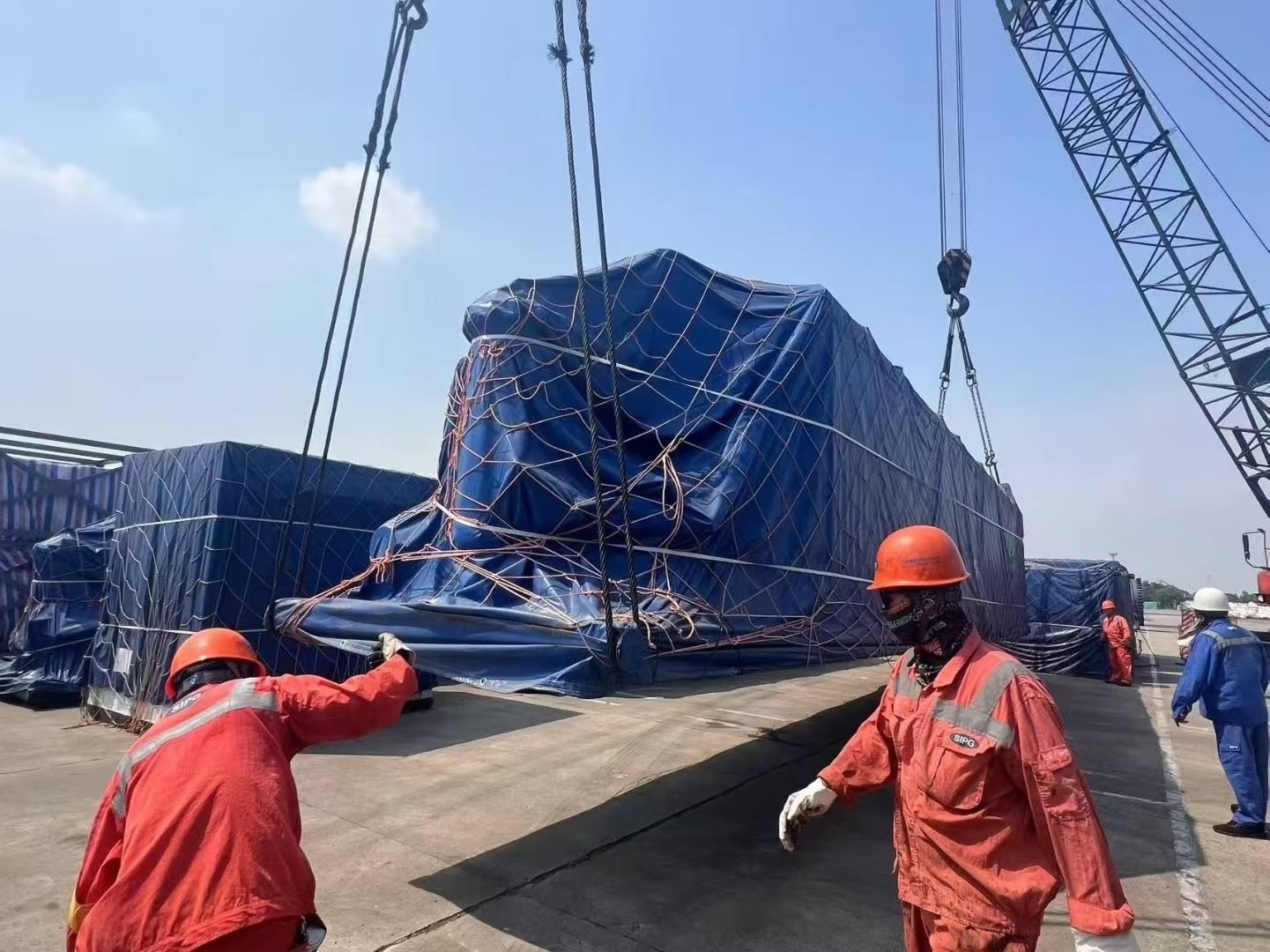
The shipment was bound for Nigeria. By the time we arrived at Zhangjiagang Port, the cargo was already in the port area.
That did not mean it was ready to load.
The shipment included construction machinery and transformers. Some pieces were bare. Others were covered and protected by steel frames. They had arrived together, but they could not be handled in the same way.
One piece at a time
We started with the cargo in front of us, not the earlier cargo list.
The first check was the outside of each shipping unit. We checked the cover, the steel frame, the base and the points where the slings could actually be connected. For the covered packages, the protection had to stay in place while the cargo was lifted and moved.
Then we measured the cargo again. The tape measure went around the actual packed units, including the parts that changed the overall length, width or height. Those figures were compared with the packing information before the lifting sequence was fixed.
The loading order took shape on the quay
The bare machinery and the protected packages were not treated as interchangeable pieces.
We checked which unit could be lifted first and where each piece could sit inside the hold. The port team adjusted the sequence around the cargo in front of them. One unit had to be moved before another could enter. Some packages needed more room under the crane. The securing points also had to remain accessible after positioning.
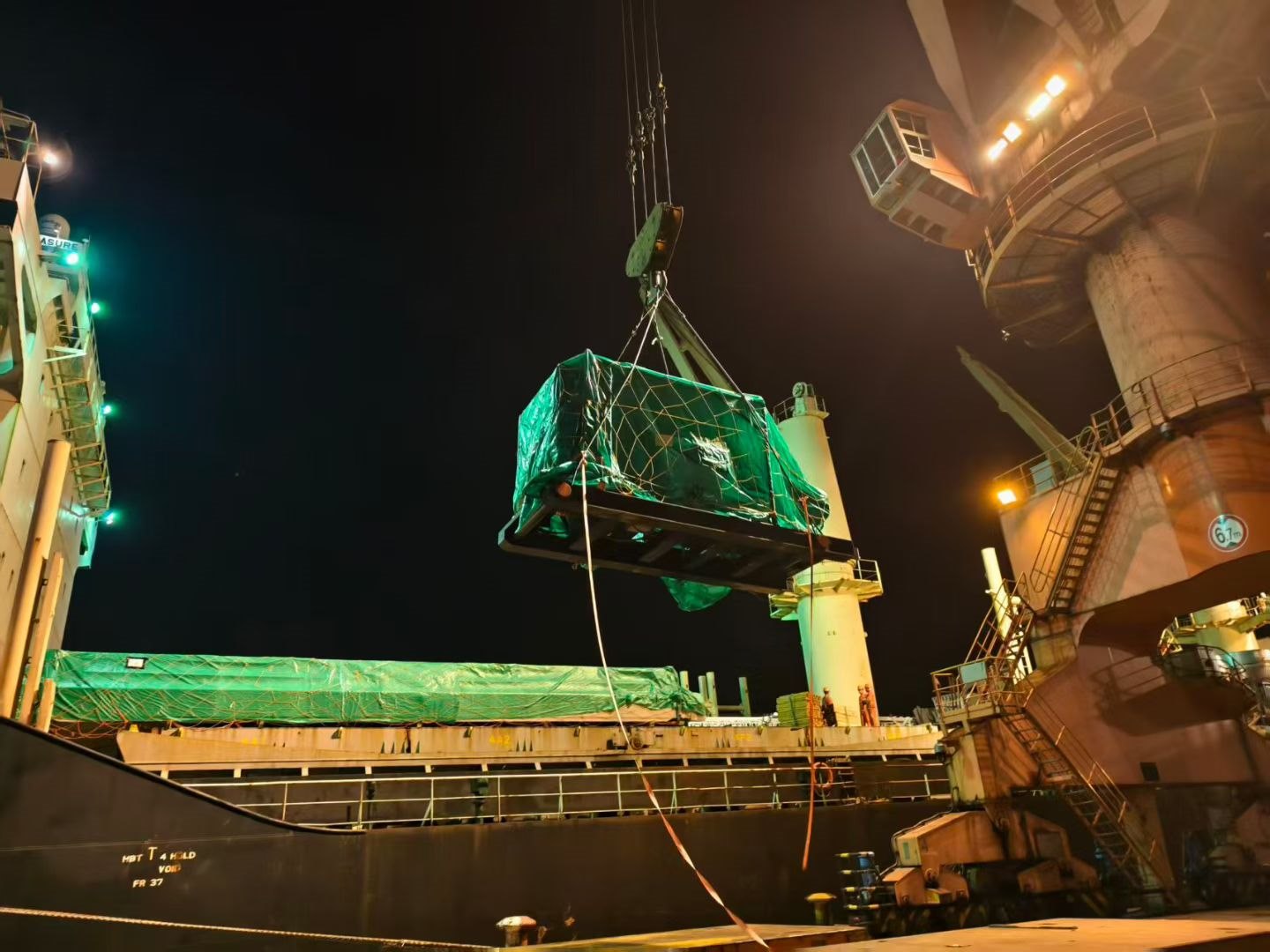
We stayed with the operation as the plan moved from the quay to the vessel. Each lift was checked before the next one started. The cargo was guided into the hold, lowered into position and secured before the following piece came over the ship's side.
Under the crane
Once the lifting started, the sequence became visible.
The covered packages were brought under the crane and guided toward the hold. The lifting gear had to stay clear of the protection and steel frame. The cargo was lowered into the planned position, checked against the surrounding space and secured before the next unit was moved.
The same process continued piece by piece.
Check the connection. Lift. Guide. Lower. Secure.
Then prepare for the next unit.
By the end, the cargo that had arrived at Zhangjiagang was no longer just cargo waiting at the port. It had been checked, measured, positioned and secured for the voyage to Nigeria.
That was the work between cargo arrival and vessel loading.