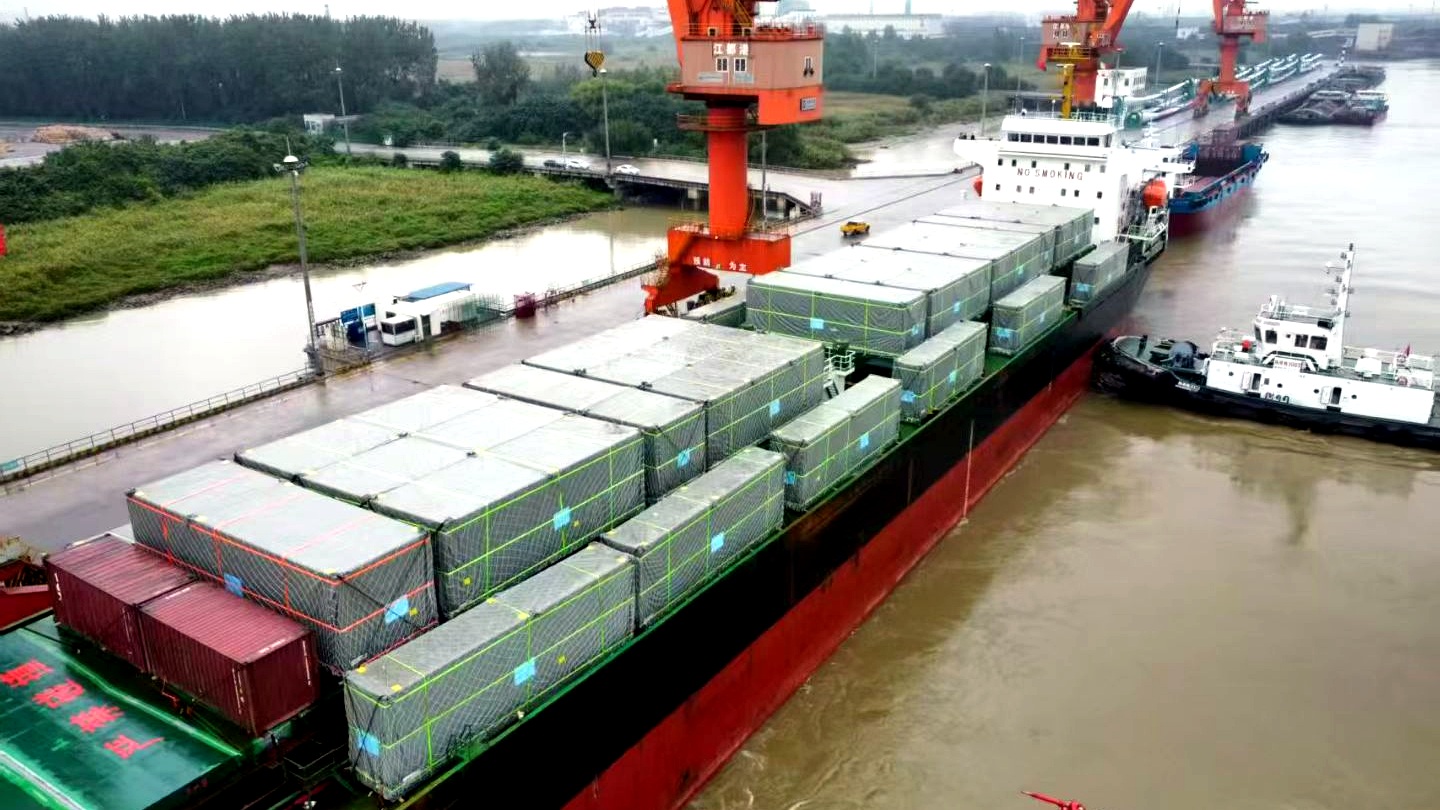
In our May–August 2026 schedule sample, about three in ten China-origin breakbulk flows point to Africa. No other destination takes a larger share.
One honest note before the details. The schedules we track are a slice of the market, not the whole market. So we read our own data in proportions, not absolutes. A share tells you something true even when the sample is partial. That is how this note is written.
Where Africa-bound cargo actually loads
The loading side is more concentrated than most shippers expect. In the same window:
- Lianyungang is the West Africa workhorse. It carries the largest share of West Africa-bound loadings in our sample. Its two busiest Africa destinations are Tema and Lagos, with Luanda close behind.
- Tianjin splits roughly evenly between West and North Africa. Luanda and Tema on one side, Misurata on the other. Their shares are comparable.
- Shanghai's Africa exposure concentrates on the south. Durban is its main lane.
There is a logic to this pattern, and it matters for planning. The northern ports sit next to the steel and bagged-cargo belt. So the vessels loading there are geared for that cargo: many lifts, large lots, fast turnarounds. Shanghai draws on the Yangtze manufacturing cluster. Its Africa-bound cargo is more mixed, with more machinery and project pieces.
What experience adds on top of the map:
- Inland cost usually decides more than ocean freight. On a long corridor, two workable loading ports rarely differ much in rate. The bigger cost is the inland leg, and whether your cargo arrives inside the window.
- Cargo arrives in lots. A vessel loads once. For steel and bagged cargo, the real question is not which port. It is whether the cargo can be gathered, checked and staged before the window opens. Port warehousing is part of the schedule, not an afterthought.
- Within a cluster, there is almost always a workable string. No single port pair dominates this corridor. That breadth is its strength. If one string shifts, another is usually within reach. The condition: start the booking conversation early.
The practical rule is simple. Your factory location picks the loading cluster, not the other way round. We handle the inland leg from either cluster. So the loading port is a scheduling decision, not a constraint.
Three different Africas at the discharge end
"Africa" is not one destination. Operationally it is three:
- West Africa (Tema, Lagos, Luanda, Douala). The volume core. Steel products, project equipment and bagged cargo drive it. Sailings repeat often here, so a missed laycan hurts least. The next window is rarely far away. The trade-off: many berths rely on the vessel's own gear, not shore cranes. So we pick the ship by its cranes as much as by its schedule. Discharge pace and congestion also vary widely port by port. A prepared consignee and an early customs broker are worth more than any paper saving.
- North Africa (Misurata, Alexandria, Djen Djen). Steady flows, often sharing vessel strings with the Eastern Mediterranean. That adds flexibility when schedules shift. Winter weather can move these strings around, and documentation practice differs country by country. So start the paperwork as early as the shipping.
- South and East Africa (Durban and the East African ports). A smaller share of the flow, so these shipments reward earlier booking and wider laycan windows. Fewer direct calls mean some cargo travels with a relay leg. Every extra handling tests the packaging and the rust protection. For this region, we plan the packing and the schedule as one decision.
Discharge conditions, congestion and documentation differ port by port. They also change over time. A static port profile is not enough at planning stage. What matters is the current picture. That is why we confirm the discharge-side situation at booking time, for each shipment.
What the cargo mix means for your shipment
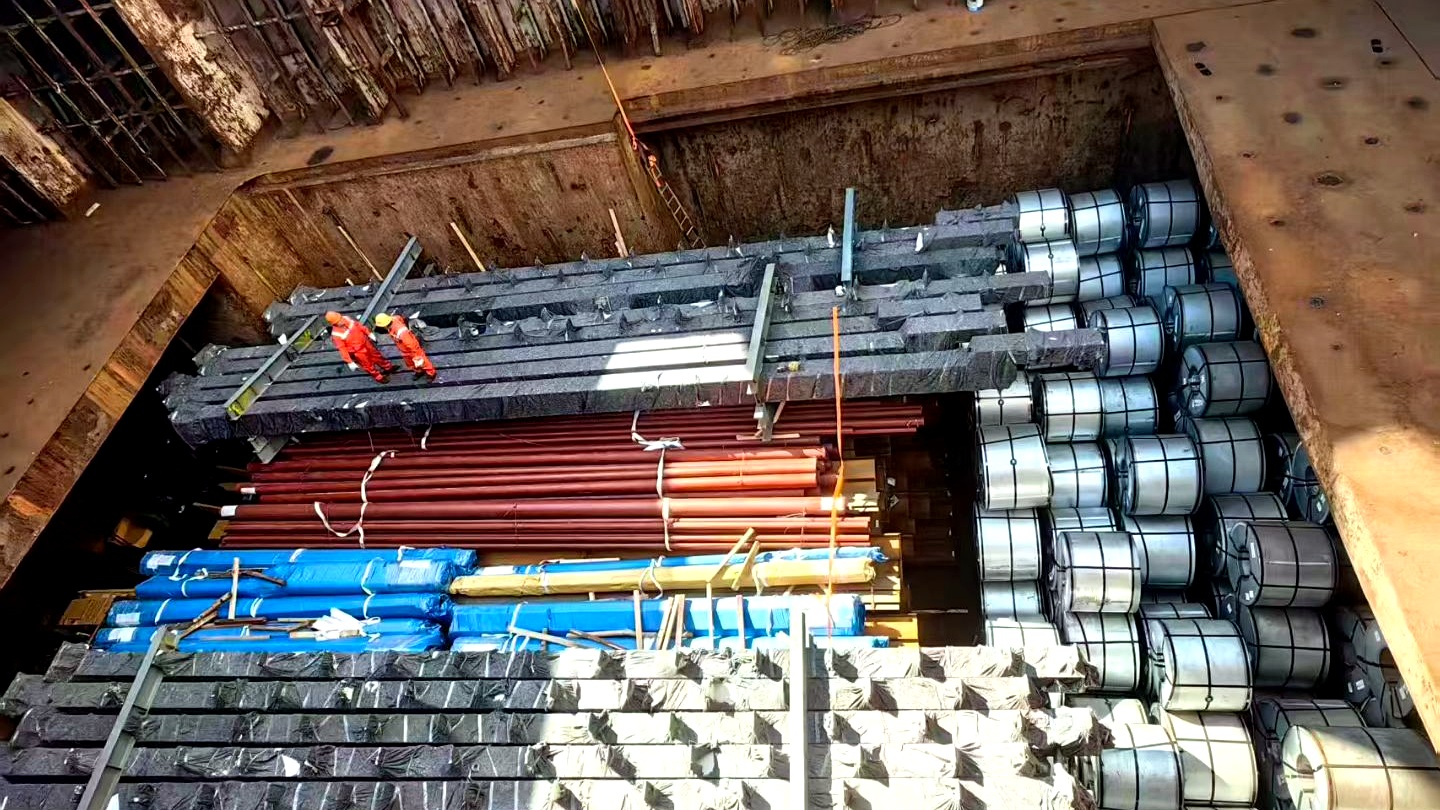
The Africa flows are dominated by three cargo families: steel products, project equipment, and bagged cargo in FIBCs. Each behaves differently on a multi-week ocean leg:
- Steel forgives stowage mistakes. It does not forgive rust or extra handling. Every extra lift is a risk event.
- Project equipment is decided by dimensions and lifting points, long before the vessel is chosen. The cargo list is the schedule.
- Bagged cargo lives and dies by packaging integrity and hold conditions. Water damage claims start at the bag, not at the port.
This is why we ask for cargo details before we talk about sailings. A lane that repeats month after month is useful only if the vessel fits your pieces.
Planning around the corridor's rhythm
Within the May–August window, August was the clear peak for Africa-bound flows. If your cargo must move in the peak weeks, secure the laycan early. The space exists. So does everyone else's cargo. If your loading window is flexible, aim for the quieter shoulders of the season. They tend to offer more vessel choice and less pressure at the loading port.
One more practical point. A listing is a window, not a date. Your cargo must be at the port, documented and ready, by the start of the window. Your own trucking and production delays eat your side of the laycan, not the vessel's.
What to send us
If you have Africa-bound cargo in planning, send us the cargo list: type, total tonnage, piece dimensions, stackability, factory city and target window. We come back with a working solution within 24 hours, including the current sailing options on the right loading cluster for your cargo.
Data note: shares refer to our breakbulk schedule sample for May–August 2026, the most complete window we track. Our sample is a partial slice of the market, which is why we state proportions rather than counts.
We follow the Africa lanes continuously and share the current picture by route on request. Ask us about your destination.