In international freight enquiries, customers often ask one question first:
What is your best price?
That is a normal question. Price matters. Every customer wants to control cost.
But for project cargo, the lowest number on a quotation is not always the lowest final cost.
The port is part of the price
The loading port is not just a name on a quotation.
For cargo from China, the workable port may be Shanghai Port, Lianyungang or Zhangjiagang. The right choice depends on the factory location, cargo size, inland route, port conditions and available sailing.
A port with a lower ocean rate may still create a higher total cost if the cargo has to travel farther by road or needs extra handling before loading.
Cargo from the Yangtze River manufacturing area may move through Shanghai Port or Zhangjiagang. A short barge leg may be more practical than a long road move. This still depends on the cargo dimensions, waterway conditions, port window and vessel arrangement.
For cargo from northern Jiangsu or nearby industrial areas, Lianyungang may be worth checking. It may reduce the inland leg or offer a suitable sailing. The answer still depends on the actual cargo and the available vessel.
The port decision should be made after checking the whole route, not by comparing ocean freight alone.
A real example at Zhangjiagang
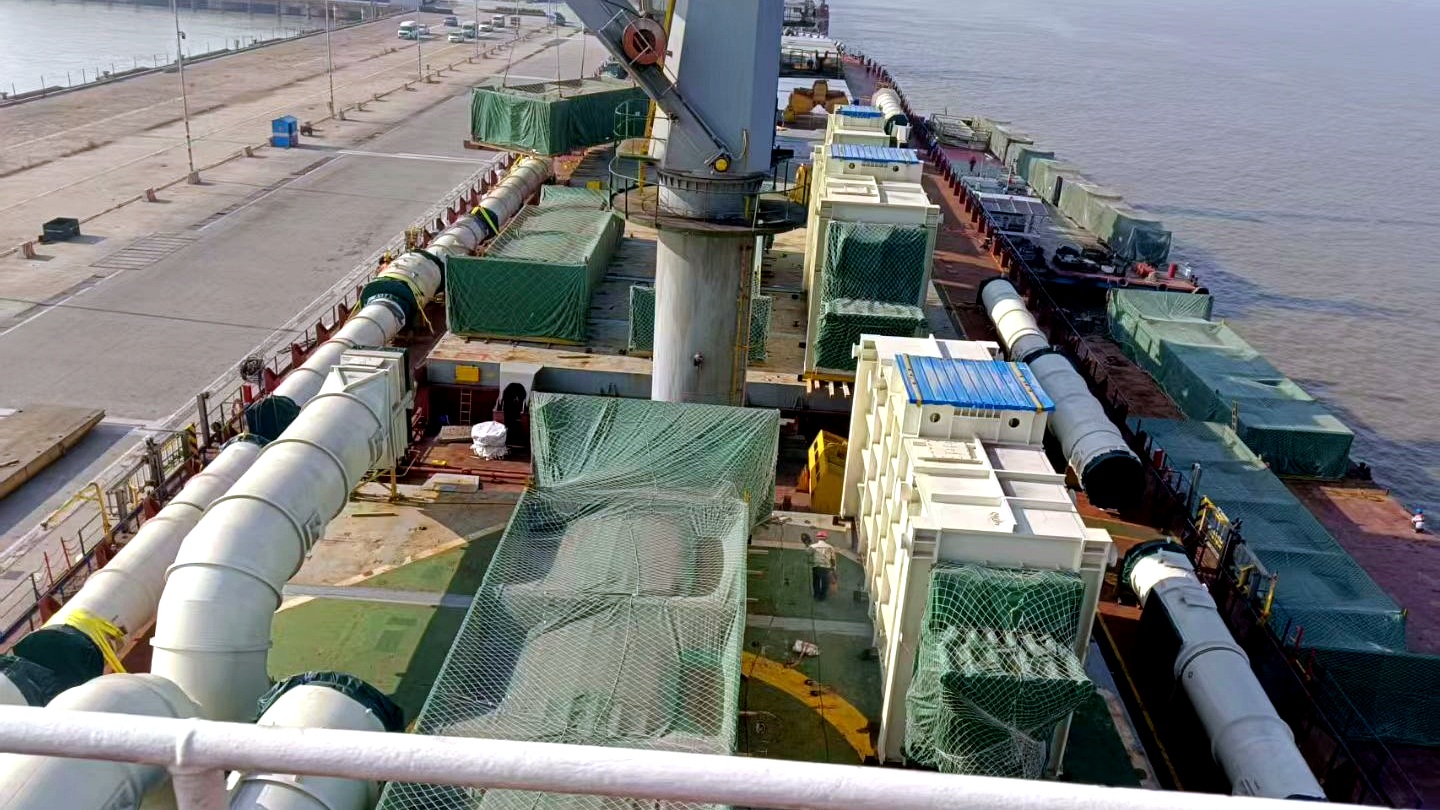
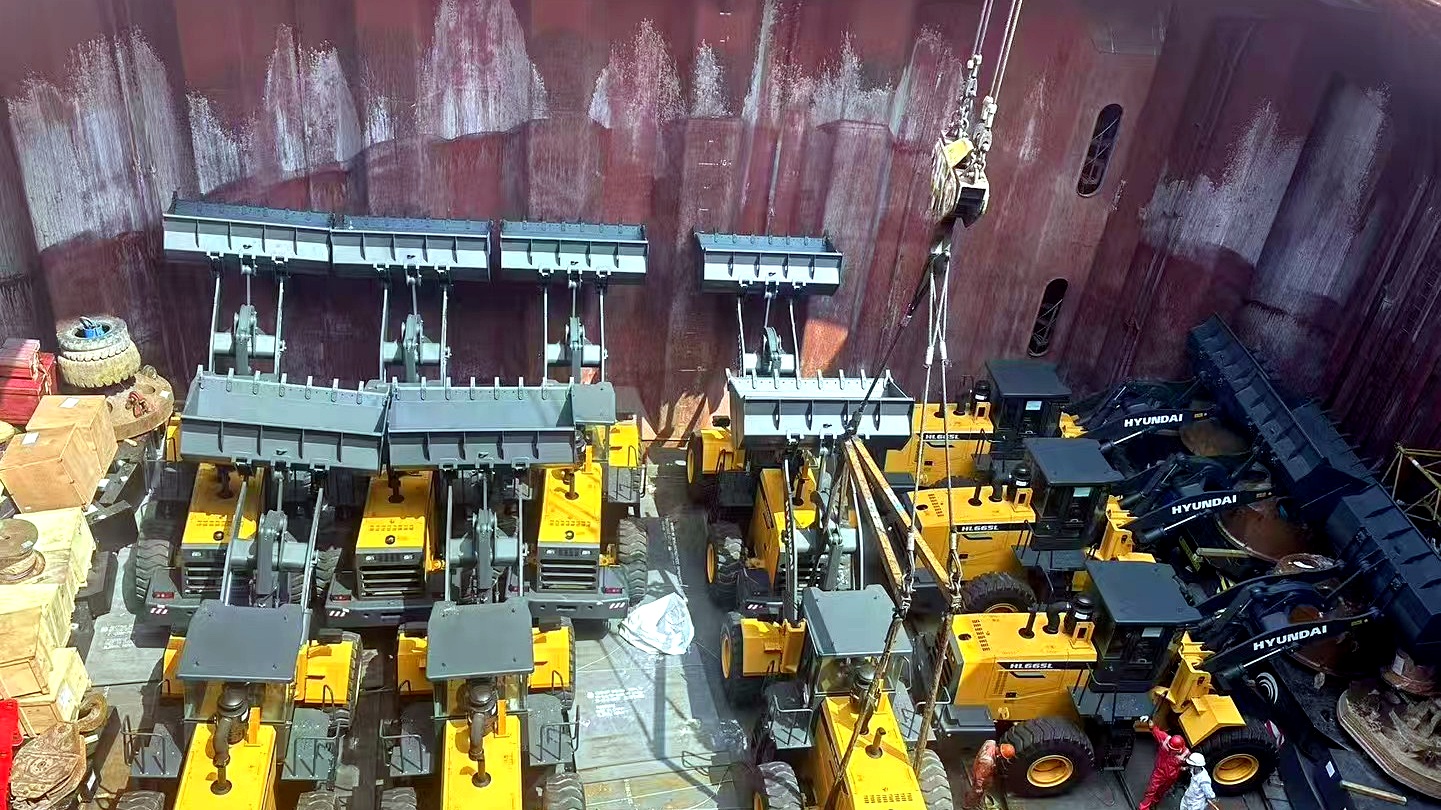
We handled a Nigeria-bound shipment that included construction machinery and transformers.
The cargo had reached Zhangjiagang. At first sight, it seemed ready for loading.
It was not.
Some units were bare. Others were covered and protected by steel frames. We checked the actual packed dimensions, the bases, the lifting points and the securing positions. We also checked the loading order inside the vessel.
One unit had to be moved before another could enter. Some pieces needed more room under the crane. The securing points had to remain accessible after the cargo was positioned.
The work was simple to describe:
Check the connection. Lift. Guide. Lower. Secure.
The cargo had arrived at the port. The loading plan still had to be completed.
This is why a port quotation alone does not tell the whole story. The cargo must also be ready for the port operation.
A simple port comparison
Consider a shipment with steel products and heavy equipment from several factories in eastern China.
Shanghai Port may offer more sailing choices for mixed cargo. Zhangjiagang may be useful when the cargo is close to the Yangtze River and can move by short-haul barge. Lianyungang may be worth checking when the factories are closer to northern Jiangsu or when a suitable sailing is available there.
The answer is not always the port with the lowest freight rate.
We compare:
- the factory-to-port distance;
- road and barge options;
- cargo dimensions and weight;
- lifting and storage conditions;
- vessel schedule and loading window;
- port charges and possible waiting time.
Only then can we compare the total transport plan.
Why the final cost can change
Project cargo may be long, wide, heavy or non-stackable. It may also need special lifting or securing.
The transport cost can include:
- transport from the factory to the port;
- road permits for oversized cargo;
- port handling and storage;
- lifting, lashing and seafastening;
- vessel and cargo-space arrangements;
- destination-port operations;
- waiting time, delays and other extra charges.
If these items are not clear at the quotation stage, the initial price may change during execution.
This does not mean that every conditional cost is a hidden charge. Some costs depend on the final cargo, vessel and port conditions. They should be identified before booking.
What we have changed
We used to spend more time trying to win low-price comparisons.
We would quote from the actual cost plus a reasonable margin. There was often another offer that looked lower.
Sometimes the difference came from a stronger position on a particular trade lane. Sometimes the service scope was different. Sometimes the initial price did not include every cost that appeared later.
We decided not to chase every low-price competition.
This does not mean that price is unimportant. It means that the price must be workable.
Before quoting, we try to confirm:
- the cargo description;
- the packed dimensions and weight;
- the factory location;
- the loading-port options;
- the vessel and sailing window;
- the lifting and securing requirements;
- the included and excluded costs.
What we promise
We may not be the lowest-priced option in every comparison.
But we aim to provide:
- a quotation based on real cargo information;
- a clear service scope;
- a practical loading-port decision;
- early warning of major risks;
- transparent cost conditions;
- regular communication during execution.
For project cargo, the lowest first number is not always the lowest final cost.
A good plan should help the cargo move safely from the factory, through the port and onto the vessel.
Price may start the conversation. Reliable execution builds the relationship.