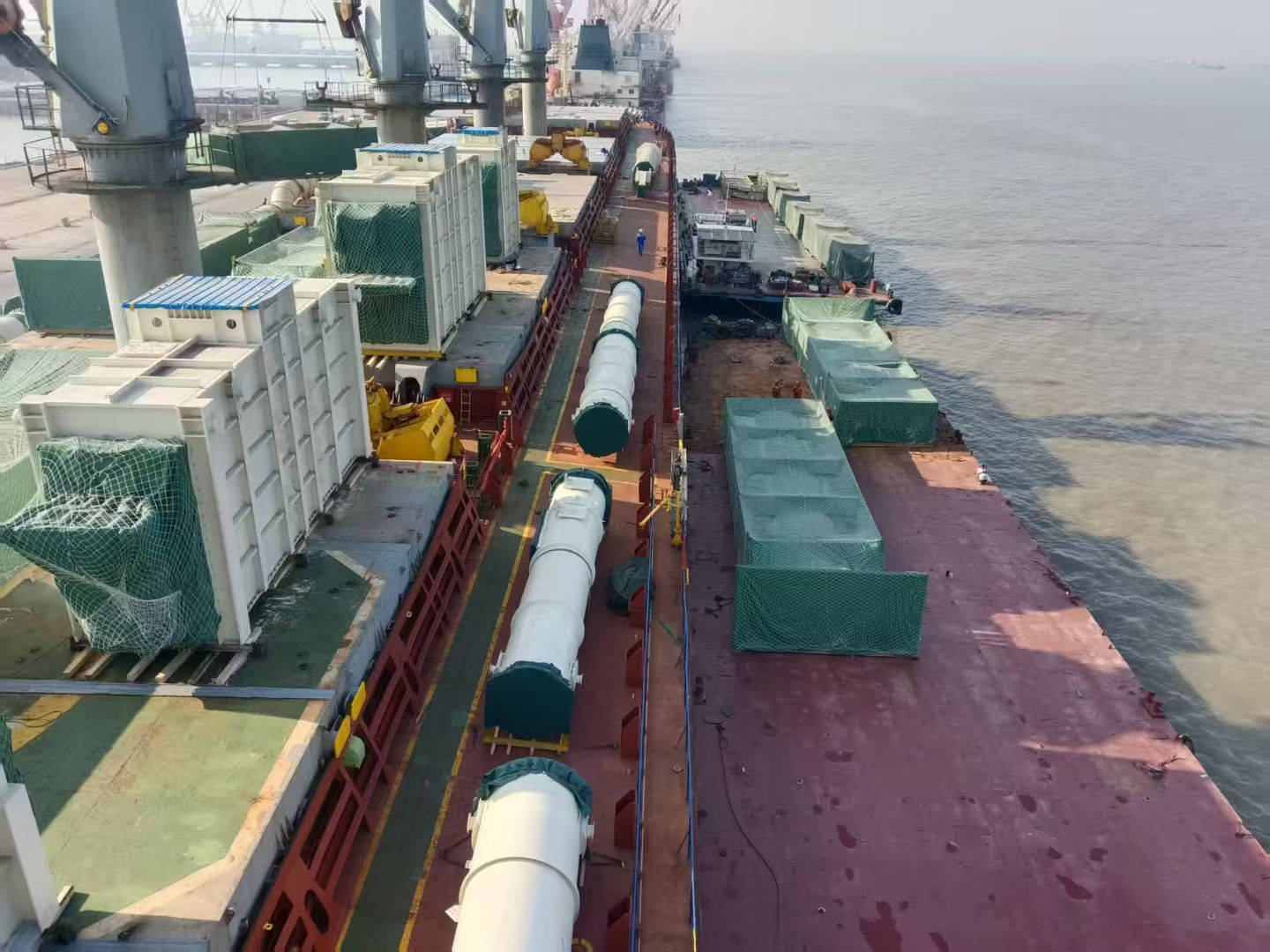
As a breakbulk freight forwarder, HYBULK coordinates the China-side operation from cargo planning to port loading. The work includes building the transport and cost plan, arranging vessel space and cargo consolidation, coordinating factory pickup and inland transport, and following the cargo through port handling, loading and securing.
At a glance, the China-side chain can include:
- Cargo and packing review, route planning and cost scope
- Vessel-space booking and consolidation of different cargo types
- Factory pickup and inland transport by road or river barge
- Temporary storage and port coordination when required
- Cargo checks, loading, securing and the agreed handover
The examples below are from separate shipments. One shows how cargo consolidation can reduce the unit cost. The other shows how a Yangtze River short-haul barge and careful port coordination can reduce inland transport costs and support loading.
Plan vessel space around the cargo
For a project involving 20 heavy transformers, HYBULK arranged a block booking of vessel space from Shanghai Port. The units weighed between 78 and 115 tonnes each, with the largest measuring 6.2 × 3.8 × 4.1 metres. They were shipped in batches to Jakarta, Surabaya and Makassar, Indonesia.
We combined different cargo types in the same booked shipment instead of using the space for transformers alone. This made fuller use of the booked capacity and helped lower the freight cost per unit for the customer. The cargo mix, destination batches and vessel arrangement had to be planned together; consolidation only works when the cargo and handling requirements are compatible.
This is one part of the freight forwarder's work: match the cargo to available space and a workable sailing plan, while keeping the cost basis clear.
Choose an inland route that fits the port
The port plan is only useful if the cargo can reach the port at a reasonable cost and in workable condition. For heavy and out-of-gauge cargo, that may call for more than a standard road move.
For a separate Nigeria-bound shipment of construction machinery and transformers, HYBULK coordinated short-haul barges on the Yangtze River to move the cargo toward Zhangjiagang Port. Using the river leg reduced reliance on inland trucking and helped lower the land-transport cost.
The barge movement, cargo readiness and port delivery had to be coordinated as one origin-side plan. A lower-cost transport mode is useful only when it connects with the port operation and vessel schedule.
Check the cargo that reaches Zhangjiagang Port
At Zhangjiagang Port, the Nigeria-bound cargo had arrived, but it was not yet ready to load. The shipment included bare machinery and packages protected by covers and steel frames.
We checked the actual shipping units, including the covers, frames, bases and available lifting points. We also measured the packed cargo and compared it with the packing information. These details affected how each piece could be lifted and positioned.
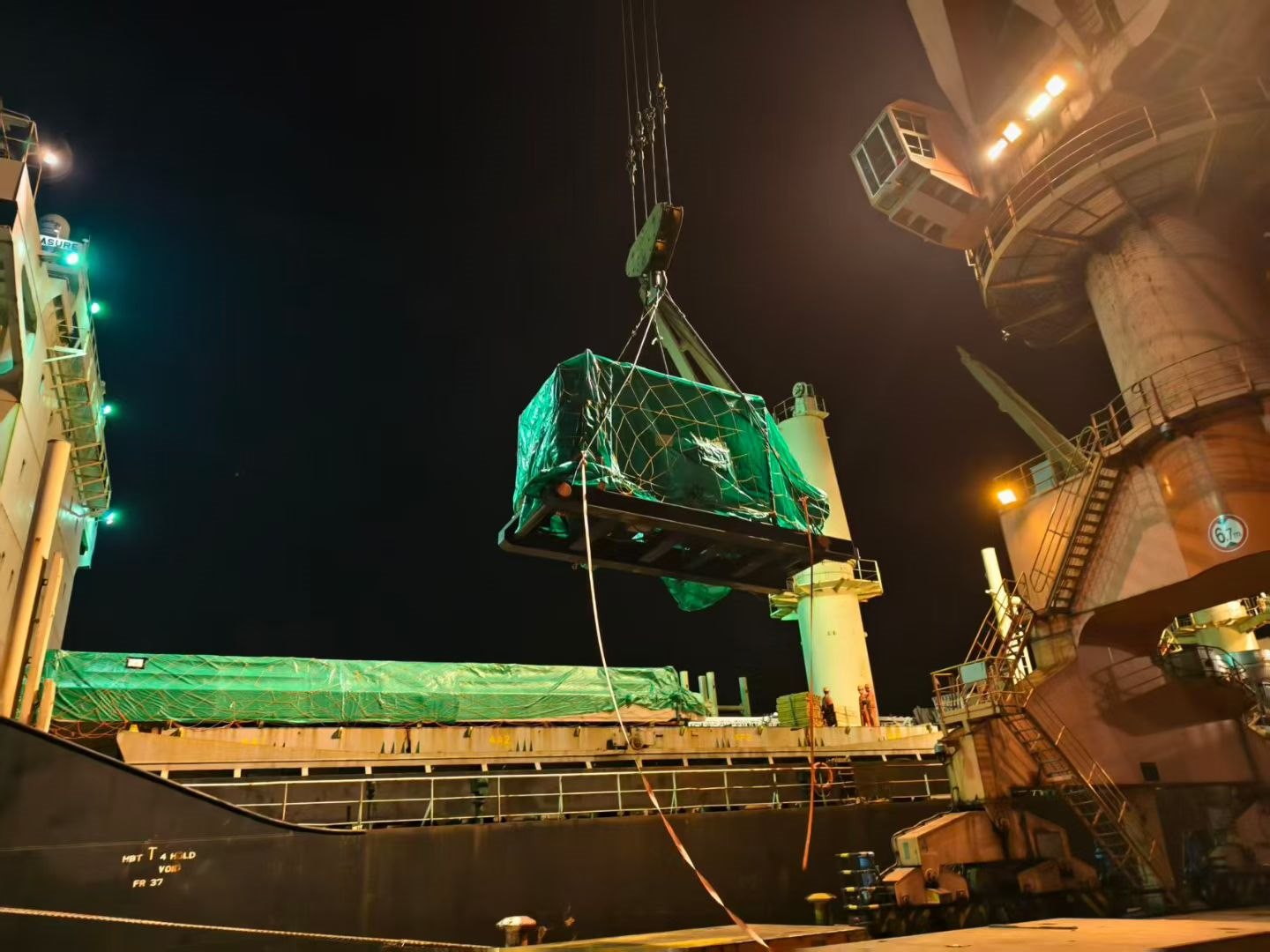
The loading order was then coordinated around the cargo on the quay and the available space in the vessel's hold. The port team carried out the physical lifts; our job was to follow the sequence and make sure each piece was positioned and secured before the next move.
Secure the cargo and follow the handover
The Shanghai transformer project required a different handling plan. Each transformer was placed on an independent steel base frame and secured with four-corner lashing. The project plan also included regular lashing checks during the voyage and advance notice to the consignee so unloading equipment could be prepared.
Different cargo calls for different transport and securing methods. The forwarder's job is to connect the decisions made before cargo moves with the checks and coordination needed at the port, then carry the shipment through the agreed handover.
One China-side operation
Vessel-space booking, cargo consolidation, factory pickup, inland transport, port delivery, cargo checks, loading and securing are not isolated services. Each stage affects the next.
HYBULK coordinates the China-side work within the agreed scope, adapting the route and handling plan to the cargo and keeping operational changes visible. In the Shanghai project, cargo consolidation helped reduce the freight cost per unit. On the Yangtze-to-Zhangjiagang move, short-haul barges helped reduce inland transport costs. At Zhangjiagang Port, cargo checks and loading coordination prepared mixed machinery packages for the voyage to Nigeria.
That is the work of a China-side breakbulk freight forwarder: plan the movement, coordinate the people and transport behind it, and carry the cargo through each agreed stage to the loading port and vessel.